Rooted in Dignity
A Message from Head of School, Jodi Grass
A Message from Head of School, Jodi Grass
Written in the center of the display is the question, “How can I become a voice for kindness and fairness when someone is being treated unfairly?” Around the edges of the poster are handprints, cut-outs from students’ and adults’ own hands with words or images responding to the question. One older student writes, “Recognize the humanity in everyone.” Another reads, “By being an upstander and protecting them.” A young “new” writer puts, “I help.”
This is a collaborative art project we have been creating together as a community throughout January. Students, faculty, staff, board members, and parenting adults have been adding their own handprints, each one distinct, each one part of something larger.
When we notice someone, or whole groups of people, being treated differently or unfairly, the question is not what “side” we are on, but what we are willing to see clearly, and how we choose to respond with care and courage. This matters whether the harm is happening in a classroom, in a community, or across society, and whether it shows up through race, national origin, religion, socioeconomic status, gender identity, disability, or any other marker of difference.
For many of us, awareness of someone being treated cruelly can feel disorienting. We may read headlines that feel far from our day-to-day lives. We may feel confusion, grief, or numbness, especially when what we are learning through media does not match what we are seeing in our immediate circles. That disconnect is real, and it can lead to paralysis, avoidance, or a tendency to “wait for more information.”
Krishnamurti offers a simple and demanding starting point, “Whereas in awareness there is observation without condemnation, without denial or acceptance.” In a progressive school context, that kind of awareness asks us to slow down enough to notice what is happening in us (fear, rage, defensiveness, certainty, helplessness) and around us (patterns, exclusions, silences, power), without rushing to justify, explain away, or look away. Clear seeing is not the end of the work. It is the beginning of action.
From there, we can ask: What is ours to do, here, now? Sometimes the response is immediate protection and advocacy. Sometimes it is education, repair, or policy alignment. Often it is the daily work of building a community where students learn to notice harm, name it, and practice responding, not as ideology, but as lived responsibility. We do not have to carry the whole world alone, but we can refuse to be passive in the face of suffering, and we can choose a way of being together that is rooted in dignity, relationship, and justice.
– Jodi Grass, Head of School
 https://ogs-main.s3.us-west-1.amazonaws.com/wp-content/uploads/Day-of-Reading_sm5-scaled.jpg
2560
2560
Ollie
https://ogs-main.s3.us-west-1.amazonaws.com/wp-content/uploads/Oak-Grove-School_50th-logo.png
Ollie2026-01-27 21:43:062026-01-27 21:49:46Day of Reading Votes Raptor Center
https://ogs-main.s3.us-west-1.amazonaws.com/wp-content/uploads/Day-of-Reading_sm5-scaled.jpg
2560
2560
Ollie
https://ogs-main.s3.us-west-1.amazonaws.com/wp-content/uploads/Oak-Grove-School_50th-logo.png
Ollie2026-01-27 21:43:062026-01-27 21:49:46Day of Reading Votes Raptor Center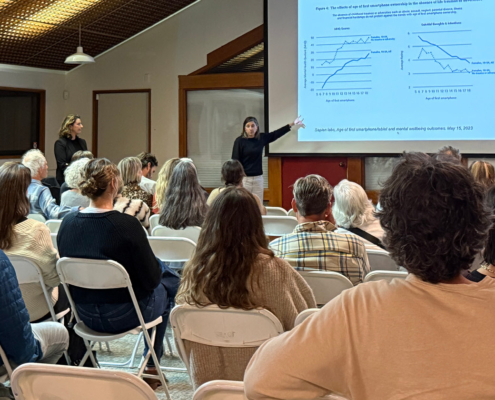 https://ogs-main.s3.us-west-1.amazonaws.com/wp-content/uploads/parent-education-data-dialogue4.jpg
840
2000
Ollie
https://ogs-main.s3.us-west-1.amazonaws.com/wp-content/uploads/Oak-Grove-School_50th-logo.png
Ollie2026-01-23 15:13:452026-01-23 15:44:28Parent Ed: Data to Dialogue
https://ogs-main.s3.us-west-1.amazonaws.com/wp-content/uploads/parent-education-data-dialogue4.jpg
840
2000
Ollie
https://ogs-main.s3.us-west-1.amazonaws.com/wp-content/uploads/Oak-Grove-School_50th-logo.png
Ollie2026-01-23 15:13:452026-01-23 15:44:28Parent Ed: Data to Dialogue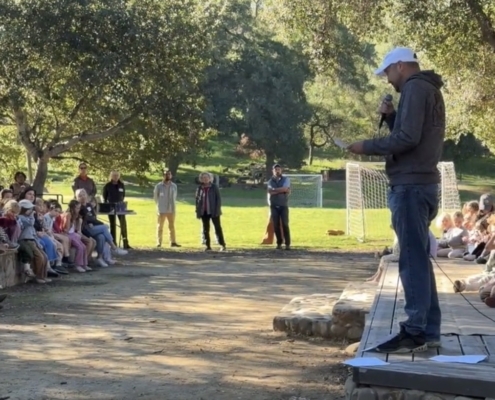 https://ogs-main.s3.us-west-1.amazonaws.com/wp-content/uploads/MLK-Day-Assembly-Large.jpeg
818
1280
Ollie
https://ogs-main.s3.us-west-1.amazonaws.com/wp-content/uploads/Oak-Grove-School_50th-logo.png
Ollie2026-01-20 07:10:592026-01-28 07:29:29MLK Day 2026
https://ogs-main.s3.us-west-1.amazonaws.com/wp-content/uploads/MLK-Day-Assembly-Large.jpeg
818
1280
Ollie
https://ogs-main.s3.us-west-1.amazonaws.com/wp-content/uploads/Oak-Grove-School_50th-logo.png
Ollie2026-01-20 07:10:592026-01-28 07:29:29MLK Day 2026


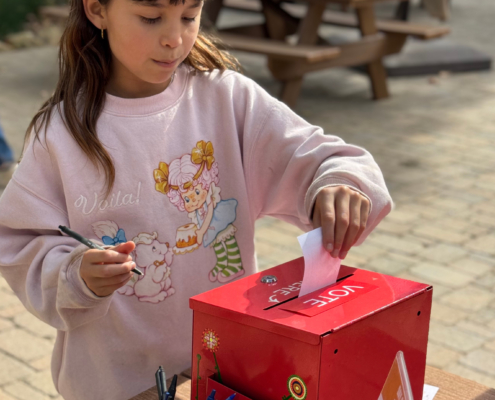
Ahead of this year’s Day of Reading, our annual student-led fundraiser that celebrates a love of books while supporting meaningful causes, Oak Grove students cast their ballots to choose a local nonprofit to support. Through this student vote, they selected the Ojai Raptor Center @ojairaptorcenter, directing 20% of the funds they raise to the organization and its work rescuing, rehabilitating, and releasing injured and orphaned birds of prey. ❤️🦅
By voting to support the Ojai Raptor Center, students are extending the spirit of Day of Reading beyond campus—demonstrating civic engagement, environmental stewardship, and thoughtful giving in action. We’re looking forward to another successful Day of Reading and the positive impact it will have on both our classrooms and the broader Ojai community.
The Day of Reading campaign will launch on February 2 and culminate on the official Day of Reading on Friday, February 13. On that day, students come to school in their pajamas with a favorite book and stuffy to spend the day immersed in reading and storytelling! 🦎🚀❤️📚📚
#dayofreading #studentfundraiser #loveofreading #readmorebooks #gratitude #community #theartoflivingandlearning #oakgroveschoolojai #prekthru12 #ojaicalifornia

As part of our Parent Ed series, Dr. Sara Marnell and Dr. Allie Binkowski facilitated a timely talk entitled "Data to Dialogue: Shining a light on youth mental health and discussing ways to support families and children in our modern tech culture." They shared evidence-based data and cautionary stories from the frontlines. In addition to specific professional recommendations, they shared helpful parenting hacks and ways in which we can better protect our children in the online world. We hope anyone attending felt better informed, connected, and supported. Thank you to Sara and Allie and all who were able to take part in this important discussion!
Find a summary of this Parent Ed event with links to resources on our blog (link in bio).
#parenteducation #technologysolutions #techsafekids #theartoflivingandlearning #science #earlychildhood #middleschool #elementaryschool #highschool #oakgroveschoolojai #prekthru12
How wonderful to welcome our seniors and chaperones back to campus today after their three-week visit to sister schools in India. We are incredibly grateful for the unique care, kindness, and friendships we experience each year. Thank you, Rishi Valley and The Valley School! Welcome home, Class of 2026! 🦎❤️ 🇮🇳 🪷
#gratitude #friendship #worldtravel #classof2026 #India #seniortrip #experientiallearning #theartoflivingandlearning #education
Another inspiring and meaningful MLK Day. Thanks to High School students across the Ojai Valley @ojaiyouth, and to all who helped and participated in today`s event. ❤️ #MLKDay #peace #civilrights #justice #peacelikeariverinmysoul 🎶🎶