Data to Dialogue
A Timely Tech-Talk for Parenting-adults

As parents and educators, we are deeply concerned about the growing issues surrounding youth mental health and the impact of technology on our children. The goal of this talk, titled “Data to Dialogue: Shining a light on youth mental health and discussing ways to support families and children in our modern tech culture,” was to build awareness about the current mental health crisis in youth and discuss its link to the modern tech culture. As working professionals in pediatrics and the E.R., Dr. Allie Binkowski and Dr. Sara Marnell shared evidence-based data and cautionary stories from the frontlines. In addition to specific professional recommendations, they shared helpful parenting hacks and ways in which we can better protect our children in the online world. We hope anyone attending felt better informed, connected, and supported. Ultimately, we also hope attendees are inspired and compelled to make a difference in changing the current climate of hurry, worry, and tech-focused culture in their homes, schools, and communities.
Dr. Allie Binkowski and Dr. Sara Marnell began by sharing statistics that reveal troubling trends and help to explain why our kids are particularly at risk. They also offered some practical steps we can take as parents, educators, and community members to help our children establish healthier boundaries and to support their mental well-being.
Numbers can be eye-opening. Our children without a phone often feel left out, making us question our decisions. However, understanding the data helps us see that we’re making informed choices. Jonathan Haidt’s “The Anxious Generation” compiles national surveys on drug use and health since the 1970s, showing a steady rate of teen depression until around 2010-2012, after which it spiked; by 2020, it had risen 150%.
This trend is consistent across various data sets, like the Monitoring the Future survey, which annually surveys 8th, 10th, and 12th graders. Depression rates were stable until around 2010-2012, then rose sharply. Similar patterns are seen in E.R. visits for non-fatal self-harm and CDC data on suicides and homicides among 10- to 14-year-olds, confirming a youth mental health crisis that began to build around 2010.
This isn’t just a U.S. issue; it’s a global one. Data from countries worldwide, including non-English-speaking nations, show the same trends starting around 2010-2012. A UK study, “The Good Childhood,” highlights significant declines in well-being indicators during this period, showing that the problem is widespread.
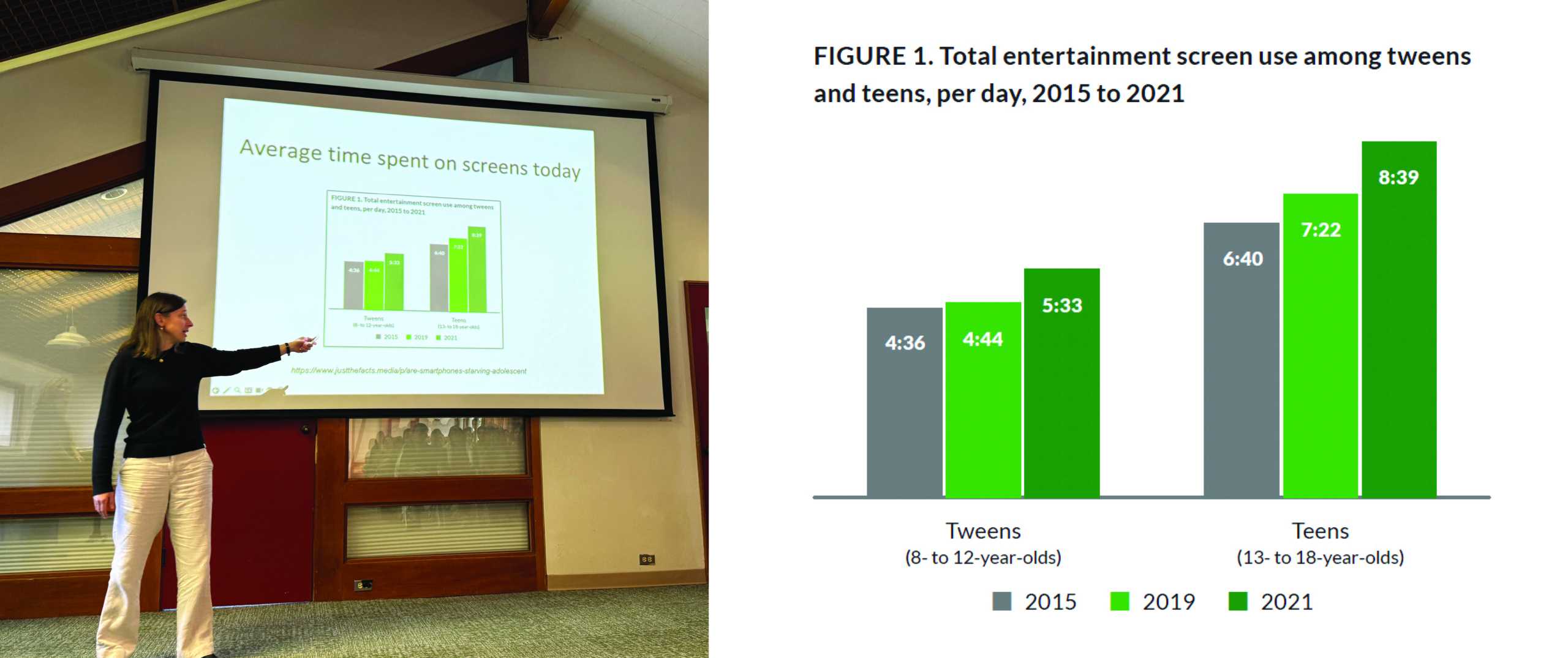
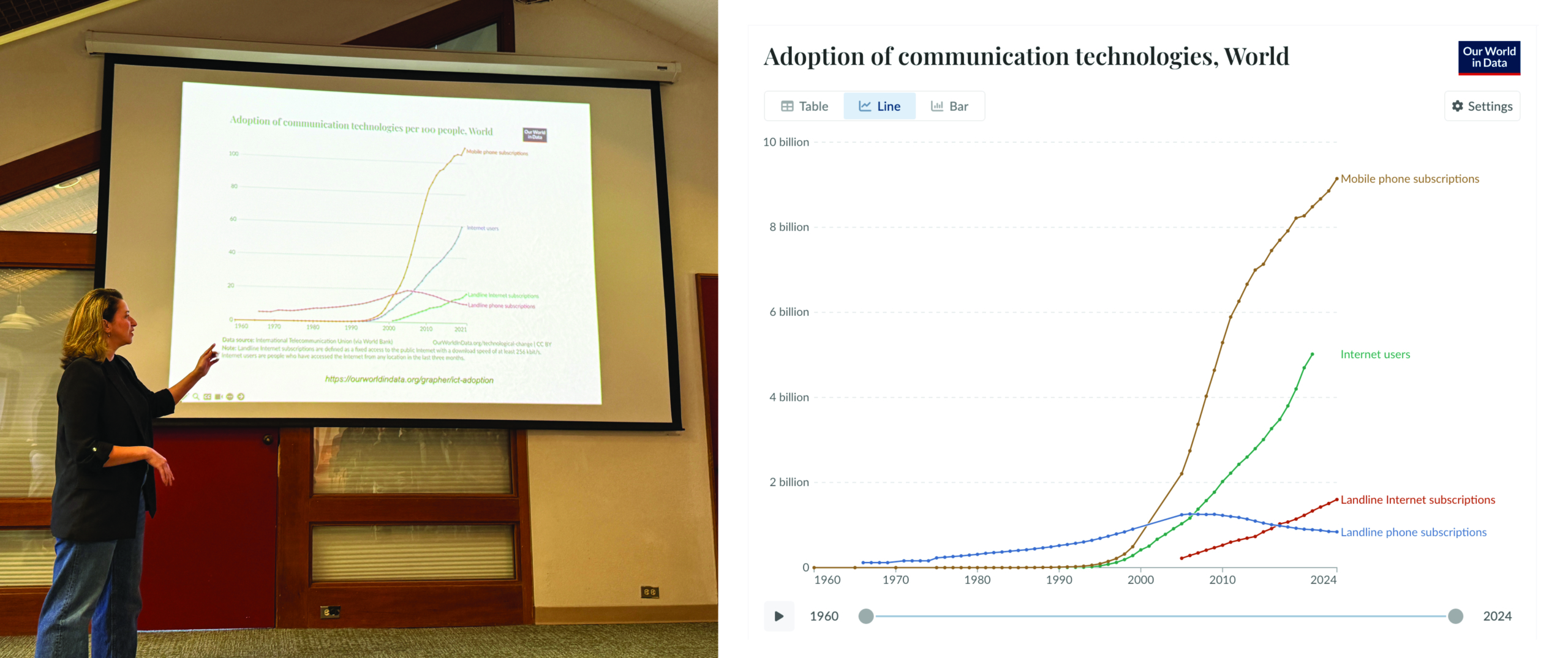
So, what changed around 2010? While global events like the pandemic might come to mind, the timeline predates 2020. The common factor is the rapid adoption of smartphones and social media. Data shows that mobile phone usage skyrocketed around 2010, coinciding with increased mental health issues among youth.
Research supports this link. A JAMA study of 7,000 children found that those spending more than three hours daily on social media had higher rates of depression and lower well-being. Another study by Sapien Labs tracked mental health outcomes based on the age of first smartphone use, revealing that earlier access is linked to poorer mental health outcomes at ages 18-24, including higher rates of suicidal thoughts and intentions.
Why are our kids more affected? Developmentally, the brain, especially the prefrontal cortex responsible for decision-making, continues to mature until around age 26. Introducing smartphones during these critical developmental stages increases risks, as children’s executive functioning is still developing.
Social-emotional development also plays a role. Around age 12, kids become more sensitive to peer opinions and body image, making them vulnerable to online pressures. The addictive design of apps and social media further exacerbates these issues, fostering dependency and negatively impacting mental health.
There’s hope. Global movements are addressing these concerns. UNESCO has recommended banning phones in schools, a policy adopted by 79 countries including France, Ghana, and Australia. In the U.S., while not yet a nationwide mandate, several states and school districts have implemented phone-free policies. All living U.S. Surgeon Generals recently identified digital technology as the top public health concern, emphasizing the urgency of this issue.
California’s school technology landscape is currently undergoing a major shift, primarily driven by new statewide mandates targeting smartphone use and the integration of artificial intelligence (AI).
Governor Gavin Newsom recently signed AB 3216, also known as the Phone-Free School Act, which significantly tightens control over personal devices.
For over a decade, Oak Grove has restricted personal phone use on campus, especially among students. This policy began as a student-led initiative inspired by visits to Krishnamurti schools in England and India, which largely operate without technology. Parenting adults and staff are also asked to refrain from using their devices while on campus. The technology policy at Oak Grove continues to evolve. Students are required to check their phones in at the office before school and can retrieve them at the end of the day. The use of computers and tablets varies by program. You can find Oak Grove’s Technology Policy in the Student-Parent Handbook or by visiting our Technology Policy webpage.
What can we do? Changing the culture around technology use is crucial. Delaying smartphone access, promoting device-free environments, and fostering open conversations about online experiences can make a significant difference. As parents, we need to model healthy tech habits, enforce clear boundaries, and build supportive communities to ease the pressure of going against social norms. Clear, firm, consistent boundaries include:
While the data highlights a troubling trend, it also empowers us to act. By understanding the risks and implementing thoughtful strategies, we can support our children’s mental health and help them navigate the digital world safely.
 https://ogs-main.s3.us-west-1.amazonaws.com/wp-content/uploads/hands-poster.jpg
1157
2000
Warren
https://ogs-main.s3.us-west-1.amazonaws.com/wp-content/uploads/Oak-Grove-School_50th-logo.png
Warren2026-01-29 16:02:242026-01-29 16:02:24Rooted in Dignity
https://ogs-main.s3.us-west-1.amazonaws.com/wp-content/uploads/hands-poster.jpg
1157
2000
Warren
https://ogs-main.s3.us-west-1.amazonaws.com/wp-content/uploads/Oak-Grove-School_50th-logo.png
Warren2026-01-29 16:02:242026-01-29 16:02:24Rooted in Dignity https://ogs-main.s3.us-west-1.amazonaws.com/wp-content/uploads/Day-of-Reading_sm5-scaled.jpg
2560
2560
Ollie
https://ogs-main.s3.us-west-1.amazonaws.com/wp-content/uploads/Oak-Grove-School_50th-logo.png
Ollie2026-01-27 21:43:062026-01-27 21:49:46Day of Reading Votes Raptor Center
https://ogs-main.s3.us-west-1.amazonaws.com/wp-content/uploads/Day-of-Reading_sm5-scaled.jpg
2560
2560
Ollie
https://ogs-main.s3.us-west-1.amazonaws.com/wp-content/uploads/Oak-Grove-School_50th-logo.png
Ollie2026-01-27 21:43:062026-01-27 21:49:46Day of Reading Votes Raptor Center https://ogs-main.s3.us-west-1.amazonaws.com/wp-content/uploads/MLK-Day-Assembly-Large.jpeg
818
1280
Ollie
https://ogs-main.s3.us-west-1.amazonaws.com/wp-content/uploads/Oak-Grove-School_50th-logo.png
Ollie2026-01-20 07:10:592026-01-31 09:32:59MLK Day 2026
https://ogs-main.s3.us-west-1.amazonaws.com/wp-content/uploads/MLK-Day-Assembly-Large.jpeg
818
1280
Ollie
https://ogs-main.s3.us-west-1.amazonaws.com/wp-content/uploads/Oak-Grove-School_50th-logo.png
Ollie2026-01-20 07:10:592026-01-31 09:32:59MLK Day 2026


Three days to go to support Day of Reading! 📚🎉❤️
oakgroveschool.org/reading
Thanks to students for sharing about their love of reading! Friday is our special DAY OF READING and we`re looking forward to a cozy day of reading together and celebrating the success of our annual 2-week fundraiser supporting classroom teaching tools with 20% going to a local nonprofit. This year, students chose @ojairaptorcenter !
#DayofReading #inspiration #gratitude #studentfundraiser #readforfun #theartoflivingandlearning #oakgroveschoolojai #ojaicalifornia #prekthru12

Grateful for our recent alumni gatherings in San Francisco and Santa Cruz that included recent Oak Grove alumni studying biology and political science, and those beyond their college years, pursuing careers in law and technology. It was so wonderful to catch up, and even more, how they connected with each other and the depth of our conversations. A special thanks to Brett `96 for taking the time to share his work at Joby Aviation!
We love to hear from OGS alumni! Reconnect by visiting: oakgroveschool.org/alumni to update your contact info. ❤️🦎
@jobyaviation #ucberkeley #sanfranciscostate #ucsantacruz #alumni #humanity #community #sanfrancisco #SantaCruz
On Feb 13th students will spend the day in cozy pajamas reading books with friends and buddies! Until then, they`ll be FUNdraising for classroom teaching tools, with 20% of proceeds going to Ojai Raptor Center. Thanks to our amazing community for supporting students, the importance of reading and love of books, and an amazing Ojai non-profit organization. 🦎❤️📚🦅
oakgroveschool.org/READ
@ojairaptorcenter #studentfundraiser #TeachingTools #loveofreading #community #inspiration #oakgroveschoolojai
Ahead of this year’s Day of Reading, our annual student-led fundraiser that celebrates a love of books while supporting meaningful causes, Oak Grove students cast their ballots to choose a local nonprofit to support. Through this student vote, they selected the Ojai Raptor Center @ojairaptorcenter, directing 20% of the funds they raise to the organization and its work rescuing, rehabilitating, and releasing injured and orphaned birds of prey. ❤️🦅
By voting to support the Ojai Raptor Center, students are extending the spirit of Day of Reading beyond campus—demonstrating civic engagement, environmental stewardship, and thoughtful giving in action. We’re looking forward to another successful Day of Reading and the positive impact it will have on both our classrooms and the broader Ojai community.
The Day of Reading campaign will launch on February 2 and culminate on the official Day of Reading on Friday, February 13. On that day, students come to school in their pajamas with a favorite book and stuffy to spend the day immersed in reading and storytelling! 🦎🚀❤️📚📚
#dayofreading #studentfundraiser #loveofreading #readmorebooks #gratitude #community #theartoflivingandlearning #oakgroveschoolojai #prekthru12 #ojaicalifornia