Trust in Human Consciousness
A Message from Head of School, Jodi Grass

Is Oak Grove a bubble, removed from the “real world”?
It’s an important question, and one worth looking at carefully.
Children are not small adults. Human development (cognitive, physical, neurological, social-emotional) unfolds over a long and intricate arc, often extending well into adulthood. To expect children to hold adult decisions or perspectives, or to navigate complex social and moral questions without support, is to misunderstand the nature of human development.
In the early years, especially, children are wired to understand the world through the lens of safety and relationship. Their primary question is not abstract or global, but immediate: Am I safe? Am I seen? Do I belong? From this foundation, everything else grows.
To grow the capacity to understand one’s impact on others, to take responsibility, to act with care, is not instantaneous. It develops slowly, through relationship, through repetition, through reflection. As Stuart Ablon reminds us in his book Changeable, when children struggle, it is not a lack of will, but a reflection of skills still emerging. These capacities must be nurtured, not demanded.
At Oak Grove, we are not trying to shield students from the world. Rather, we are creating the conditions in which they can come to understand it intelligently.
Krishnamurti spoke often about the importance of self-understanding, of seeing clearly without distortion. This kind of perception cannot emerge in a state of fear. When the brain is under stress, when the nervous system is activated for survival, our ability to think clearly, to perceive fully, is diminished. We react rather than respond.
What kind of environment allows intelligence to awaken?
A learning environment that is predictable, emotionally safe, and grounded in relationship does not remove children from reality. It allows them to meet reality without fear. From that place, they can begin to question, to observe, and to understand both themselves and the world around them.
This is not about protecting children from complexity, but about supporting them to grow into it.
When our students are given space to inquire, reflect, and trust their own perception, they begin to develop an inner awareness that is not shaped by external pressure or the pull of conformity. From this foundation, they are less vulnerable to manipulation, groupthink, or coercion. They grow in their ability to notice when something is out of alignment, to question it, and to respond with clarity.
Perhaps what we perceive as being a “bubble” is an environment carefully set for children to grow in relationship, and the slow, necessary unfolding of human development. One where children can meet the natural stressors and challenges of childhood within a development-sensitive environment, where highly skilled adults nurture emotional intelligence, care for others, and a deep understanding of the world within.
The question then shifts from Is this separate from the real world? And becomes, What kind of world are we preparing children to meet, and to create?
This type of education reflects trust that when humans have the skills, a sense of belonging, a connection to their natural intelligence, they will respond to distortion, forces of control, with awareness and sensitivity. In this way, our students become a living response to a troubled world.
To trust in the natural intelligence of children, in human consciousness itself, is a form of resistance.
 https://d381ib15gv5oql.cloudfront.net/wp-content/uploads/Fundraising-Tea-2026-video.jpg
717
1280
Ollie
https://d381ib15gv5oql.cloudfront.net/wp-content/uploads/Oak-Grove-School_logo.png
Ollie2026-10-11 10:49:532026-10-19 10:56:43Annual Fundraising Tea
https://d381ib15gv5oql.cloudfront.net/wp-content/uploads/Fundraising-Tea-2026-video.jpg
717
1280
Ollie
https://d381ib15gv5oql.cloudfront.net/wp-content/uploads/Oak-Grove-School_logo.png
Ollie2026-10-11 10:49:532026-10-19 10:56:43Annual Fundraising Tea https://d381ib15gv5oql.cloudfront.net/wp-content/uploads/High-School-Community-Agreement-Wordcloud.jpeg
960
1280
Ollie
https://d381ib15gv5oql.cloudfront.net/wp-content/uploads/Oak-Grove-School_logo.png
Ollie2026-09-28 12:54:562026-09-29 18:48:07Beginnings of Learning
https://d381ib15gv5oql.cloudfront.net/wp-content/uploads/High-School-Community-Agreement-Wordcloud.jpeg
960
1280
Ollie
https://d381ib15gv5oql.cloudfront.net/wp-content/uploads/Oak-Grove-School_logo.png
Ollie2026-09-28 12:54:562026-09-29 18:48:07Beginnings of Learning https://d381ib15gv5oql.cloudfront.net/wp-content/uploads/High-School-students-trail.jpeg
960
1280
Ollie
https://d381ib15gv5oql.cloudfront.net/wp-content/uploads/Oak-Grove-School_logo.png
Ollie2026-09-25 11:10:122026-09-29 11:12:26The Living Movement of Relationship
https://d381ib15gv5oql.cloudfront.net/wp-content/uploads/High-School-students-trail.jpeg
960
1280
Ollie
https://d381ib15gv5oql.cloudfront.net/wp-content/uploads/Oak-Grove-School_logo.png
Ollie2026-09-25 11:10:122026-09-29 11:12:26The Living Movement of Relationship


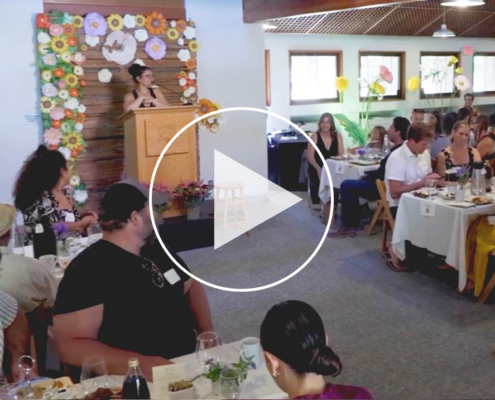
Each year, we choose an annual theme that invites us to pause and reflect on our deepest purpose. This year, we have chosen the theme “The Living Movement of Relationship.” In this short video, students and faculty share their reflections on the theme and how it connects to their experiences at Oak Grove School.
#theartoflivingandlearning #oakgroveschoolojai #jkrishnamurti

The Lizards are headed to the CIF playoffs! 🦎🏐
After winning the Condor League, the Oak Grove Girls Volleyball team will travel to Irvine this Wednesday for a 5 pm playoff match vs TVT Community Day School.
If you’re in the area or up for making the drive, come help us cheer on the Lizards!
#bumpsetspike #theartoflivingandlearning #oakgroveschoolojai #jkrishnamurti
Join us for Open House on Saturday, November 7th, and enjoy campus tours, a complimentary vegetarian lunch, meetings with faculty in open classrooms, student exhibits, and live entertainment. Always such a joyful day filled with community spirit!
Please RSVP at: https://oakgroveschool.org/open-house/ (link in bio). See you here!
#theartoflivingandlearning #jkrishnamurti #oakgroveschoolojai
Our 9th-grade Environmental Science and 10th-grade Biology students headed into the field this week for the first visit in a new partnership with Ojai’s Turtle Conservancy. Through fieldwork, guest speakers, and classroom learning, students are excited to explore our local ecology while contributing to the Conservancy’s work through service learning. ❤️ 🐢
@turtleconservancy #highschoolojai #highschoolscience #turtleconservation #servicelearning #conservation #naturelovers